Call Us Today on 01904 626388

Menu

Menu
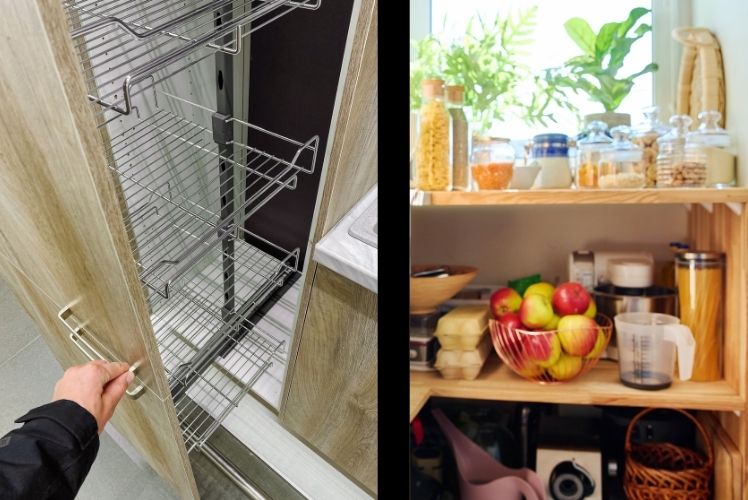
When planning a new kitchen, storage decisions often come down to how you actually live day to day. One of the most common questions we’re asked is whether a pull-out larder unit is a better option than a more traditional pantry cupboard.
Both have their place, and both can work beautifully when designed properly. The right choice depends on your space, how you cook, and how much accessibility matters to you.
In this guide, we’ll take a closer look at pull-out larder units, kitchen larder units, and pantry cupboards, comparing the pros and cons of each to help you decide what will work best in your kitchen.
A pull-out larder unit is a tall storage cabinet fitted with internal baskets or shelves that slide out as a single unit. When you open the door, the entire contents move forward with it, giving you a clear view of everything stored inside and making it easy to reach items stored inside.
Often described as pull-out pantry or tall larder storage, these units are particularly popular in modern kitchen designs where efficiency and ease of access are a priority.
Slim pull-out larder units are designed to utilise narrow gaps and are ideal for holding small items like oils, spices, and bottles.
Pull-out larders are usually available in a range of widths and heights and can be tailored with different basket layouts depending on what you plan to store. For added practicality, adjustable shelves or wire baskets can be moved or removed to fit different item heights.
A pantry cupboard is a tall cabinet with fixed internal shelves, sometimes combined with drawers or internal door storage. Unlike a pull-out larder, the shelves stay in place and you access items by opening the door and reaching inside.
Pantry cupboards are a familiar choice and work especially well in more traditional kitchens or where a classic, unfussy storage solution is preferred. They can be designed to feel substantial and furniture-like, particularly when paired with framed doors or heritage finishes.
Freestanding kitchen units go beyond mere storage; they are a design statement, seamlessly integrating into your kitchen's aesthetic while providing practical storage solutions.
You can choose from a variety of cupboard styles or types of doors to best suit your kitchen's look and your storage needs.
The main difference between a pull-out larder unit and a pantry cupboard is how easy it is to access what’s inside. Both pull-out larder units and pantry cupboards are excellent for keeping essentials accessible and organized, making it easier to maintain a tidy and functional kitchen.
Because everything slides out together, pull-out larder units offer excellent visibility. You can see items stored at the back just as easily as those at the front, which makes them ideal for:
Busy households
Smaller kitchens
Anyone who prefers everything at eye level
Pull-out larder units create a more organised and accessible storage solution by allowing you to easily reach and view all your pantry items.
They’re particularly useful for reducing wasted space and forgotten items.
With a pantry cupboard, access depends on shelf depth and height. Items stored at the back can be harder to see, especially on deeper shelves, and taller cupboards may require bending or stretching.
That said, with good internal planning and sensible shelf spacing, a pantry cupboard can still be very practical.
Full-height larders stretch from floor to ceiling to offer maximum storage capacity for dry goods and kitchenware.
A well-designed tall larder storage unit can hold a surprising amount, but the internal baskets and runners do slightly reduce usable space compared to a plain cupboard. High-quality runners can support up to 120kg, though individual baskets may have lower weight limits. Soft-close mechanisms prevent slamming, reduce noise, and protect the unit from wear.
Pull-out systems work best when you want organised, structured storage for:
Tins and jars
Dry goods
Bottles
Smaller kitchen items
They encourage organisation, but they do require a bit of discipline to keep tidy. The great advantages of these systems are their ability to maximise storage and keep everything easily accessible.
A pantry cupboard offers more open storage and can feel more flexible. You can store bulkier items, small appliances, or baskets without being restricted by fixed basket sizes. Pantry cupboards are also ideal for organising and storing snacks and school lunches, making it easy to access these items quickly.
This makes pantry cupboards a good choice if you like adaptable storage or tend to buy in larger quantities. A pantry cabinet is a game-changer for those seeking a clutter-free space, providing a designated spot for everything from spices to snacks.
Visually, both options can be designed to blend seamlessly into your kitchen.
Pull-out larder units tend to suit modern and contemporary kitchens, where clean lines and clever internal mechanisms are part of the appeal. From the outside, they look like a standard tall cabinet, but the functionality is revealed once opened. In 2026, the design trend for pull-out larder units emphasises warm minimalism and natural textures, with earthy palettes like mushroom, taupe, terracotta, and deep greens favored for kitchen aesthetics.
Pantry cupboards often feel more traditional, especially when paired with classic door styles or internal wooden shelving. They can add charm, character, and a sense of permanence to the kitchen.
Neither option is better from a design point of view, it’s about choosing what complements the overall style of your kitchen. For more ideas, seek inspiration to help visualise and plan your ideal kitchen layout and storage solutions.
Price is often a deciding factor.
Pull-out larder units usually cost more than a standard pantry cupboard because of the internal mechanisms and hardware. High-quality runners and baskets are essential to ensure smooth operation and longevity.
Pantry cupboards are generally more cost-effective, particularly if they use fixed shelving without specialist fittings.
During the design process, it’s often possible to balance costs by mixing both options across the kitchen rather than committing to one style throughout.
A pull-out pantry relies on moving parts, which means quality matters. Well-made systems are designed to cope with weight and daily use, but cheaper mechanisms can wear over time if overloaded.
Pantry cupboards have fewer components that can fail, making them a very robust option in the long term. Shelves can be adjusted, replaced, or refreshed without much fuss.
Both options will last for many years when specified correctly and used as intended. The practicality of pull out larder units and pantry cupboards ensures they not only stand the test of time but also make everyday kitchen organization and access much easier.
In compact kitchens, pull-out larder units often come into their own. Being able to see everything at once reduces rummaging and makes the most of narrow spaces.
However, a slim pantry cupboard can also work well where wall space allows and can sometimes feel less visually dominant than a very tall pull-out unit.
This is where careful planning really matters. What works on paper does not always translate perfectly into real-world use.
To find the best fit for your space, browse our range of pull-out larder units and pantry cupboards designed for compact kitchens.
Absolutely. Many kitchens benefit from a mix of storage types.
For example:
A pull-out larder near the cooking zone for everyday ingredients
A pantry cupboard elsewhere for bulk storage or less frequently used items
Combining solutions often delivers the best balance of accessibility, capacity, and cost.
Discover more storage solutions and design ideas to make the most of your kitchen space.
There’s no single answer to whether a pull-out larder unit or a pantry cupboard is better. The right option depends on how you cook, how much space you have, and how you want your kitchen to work day to day.
If you’re planning a new kitchen and want to explore storage solutions in more detail, we’d be happy to talk things through and help you find the right option for your home. Visit our York Showroom or contact us here.