Call Us Today on 01904 626388

Menu

Menu
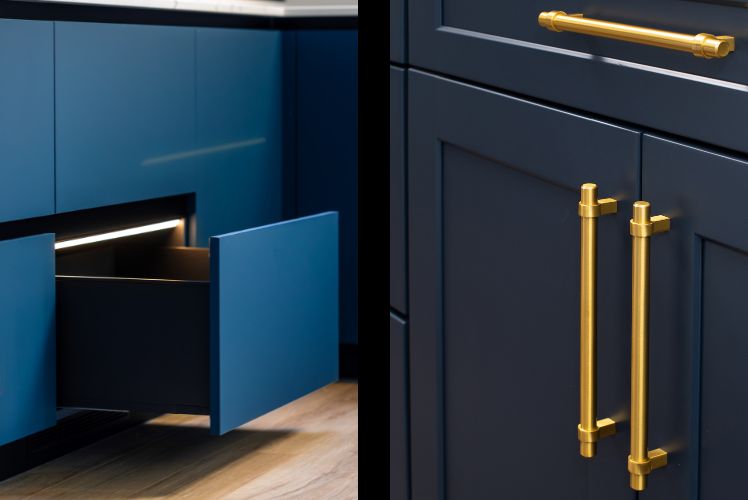
When planning a new kitchen, one of the most common layout questions is whether to prioritise kitchen cupboards or drawers. For decades, cupboards were the default choice. Today, deep kitchen drawers and pan drawers are increasingly popular, particularly in modern kitchens. In 2026, kitchen design trends strongly favour drawers for small spaces due to their superior accessibility and space optimization.
Both options can work well, but they serve slightly different purposes. The best choice depends on how you cook, what you store, and how you want your kitchen to function day to day. Considering your kitchen layout is essential, as a thoughtful combination of kitchen cupboards and drawers is the most effective approach for storage, especially in York homes, where this trend is on the rise.
In this guide, we’ll look at the practical differences between deep drawers and traditional cupboards, and how each fits into effective kitchen storage design as part of achieving your dream kitchen and optimising your overall kitchen design.
At a glance, the difference seems simple.
Cupboards are enclosed spaces with shelves, accessed by opening a door. Items in lower cupboards can get lost at the back, often requiring you to kneel or bend and rummage to find them.
Drawers pull out fully, bringing their contents towards you. Drawers can be more beneficial for those with mobility issues or disabilities due to their accessibility.
In reality, how they perform in everyday use is quite different, particularly when it comes to accessibility and organisation.
One of the main advantages of deep kitchen drawers is visibility. When you open a drawer, you can see everything inside at once. Drawers eliminate the need to rummage, making it easier to access kitchen essentials, cutlery, dishes, pots, pans, and serving dishes.
Kitchen drawer boxes provide organised storage for utensils, cutlery, and other kitchen essentials, and drawers can fully extend out, making contents easier to reach.
This makes drawers particularly well suited to storing:
Pans and lids
Crockery
Food containers
Small appliances
Pan drawers in kitchens are especially popular near the hob, keeping cookware close to where it’s used.
Stacking organisers and boxes can help maximise storage space and maintain visibility in deep drawers, making it easier to access what you need.
Using tall and slender containers is ideal for storing taller items and maximising storage for non-perishable food items. Leaving some extra space in deep drawers can help prevent clutter and avoid the 'bottomless pit' effect, where items get lost or buried. It is advisable to avoid stacking items that are not duplicates in deep kitchen drawers to prevent clutter.
Drawer dividers, cutlery storage trays, and creative organising methods are especially important for keeping smaller items tidy and accessible.
This structure reduces wasted space and makes it easier to keep things organised over time.
For many homeowners, drawers simply feel easier to live with. They reduce bending, improve visibility, and speed up everyday tasks.
Choosing the right drawer sizes can enhance both the functionality and the aesthetic appeal of your kitchen. The right drawer size can transform your kitchen experience, making everything from meal prep to cleanup smoother and more efficient.
Once people get used to drawers, particularly for base units, it’s common to favour them over cupboards in future kitchens.
Cupboards still have a place, particularly when flexibility matters. A cupboard with adjustable shelves can accommodate tall or awkwardly shaped items more easily than a drawer, and provides room for larger or less frequently used items, such as linens.
They’re often used for:
Large appliances
Bulk food storage
Cleaning products
Linens
Items used less frequently
Pantry and larder cabinets are often installed for flexible storage needs, and the most common cupboard sizes for general storage are 18 to 24 inches wide.
Cupboards also work well under sinks, where plumbing can limit drawer options.
From a cost point of view, cupboards are generally simpler and more affordable. They use fewer components and don’t rely on heavy-duty runners. Cupboards are typically more budget-friendly than drawers, and cabinets tend to be more affordable than drawer units due to their simpler construction. Drawers are typically more expensive than cabinets due to their intricate mechanics and installation process.
For some kitchens, particularly where budget needs to be carefully balanced, cupboards remain a sensible choice.
Most base cabinets and drawers have a standard depth of around 24 inches, which ensures compatibility with appliances and overall kitchen design, though custom depths are possible for specific needs.
It's also important to leave enough space for cabinet doors to swing open comfortably and to allow proper movement between kitchen units. The worktop plays a key role in determining overall kitchen measurements and must be considered for compatibility with appliances and the layout.
Standard base kitchen cupboards are usually around 560mm deep internally, although this can vary slightly depending on the cabinet system and door style. Standard base cabinets are foundational to most kitchen layouts, and their depth is specifically designed to accommodate a wide range of storage needs.
Shelves typically run the full depth, which can make items at the back harder to access.
Kitchen drawers are often slightly shallower internally due to the drawer box and runners, but they make up for this by being fully extendable. The standard depth for kitchen drawers is around 24 inches (60 cm), which maximises storage space and ensures compatibility with most kitchen appliances.
Deep drawers are designed to carry significant weight and can comfortably store heavy cookware without difficulty.
In practice, the most successful kitchens rarely choose one option exclusively.
A common approach is to:
Use deep drawers for everyday items like pans, crockery, and utensils
Keep cupboards for bulkier or less frequently used items
A thoughtful combination of kitchen cabinets, drawers, and kitchen islands can maximise storage space and functionality, ensuring everything has its place and is easy to access. Choosing between kitchen cupboards and drawers involves balancing accessibility, cost, and specific storage needs.
This mix allows the kitchen to stay practical without overcomplicating the layout or the budget.
When deciding between kitchen cupboards or drawers, consider both the width and depth of the drawers based on the items you plan to store.
If you have narrow gaps, 300mm or 400mm drawer units are effective for small spice or utensil storage. Shallow drawers (4-6 inches high) are ideal for utensils, cutlery, and small kitchen tools. Medium drawers (7-10 inches high) work well for larger items like mixing bowls, while deep drawers (10-12 inches high) are best for storing pots, pans, and small appliances.
Deep drawers work particularly well if:
You cook regularly
You want easy access to cookware
Organisation is a priority
Cupboards may suit you better if:
You store larger or irregular items
You want flexible shelving
You’re balancing costs carefully
The key is designing storage around how you actually use your kitchen, not just what looks good on a plan.
The difference between drawers and cupboards is much easier to appreciate in person than on paper. Opening drawers, testing heights, and seeing how much they really hold can change how a layout feels. Seeing installed kitchen cupboards or drawers firsthand also lets you compare materials, construction quality, and overall functionality.
If you’re planning a new kitchen, exploring different kitchen storage ideas and combinations can help you find the right balance between convenience, flexibility, and cost. Visit our York showroom or contact our team to discuss your requirements further today.